

How AI Is Transforming Tech Recruitment (And What Still Needs a Human Touch)

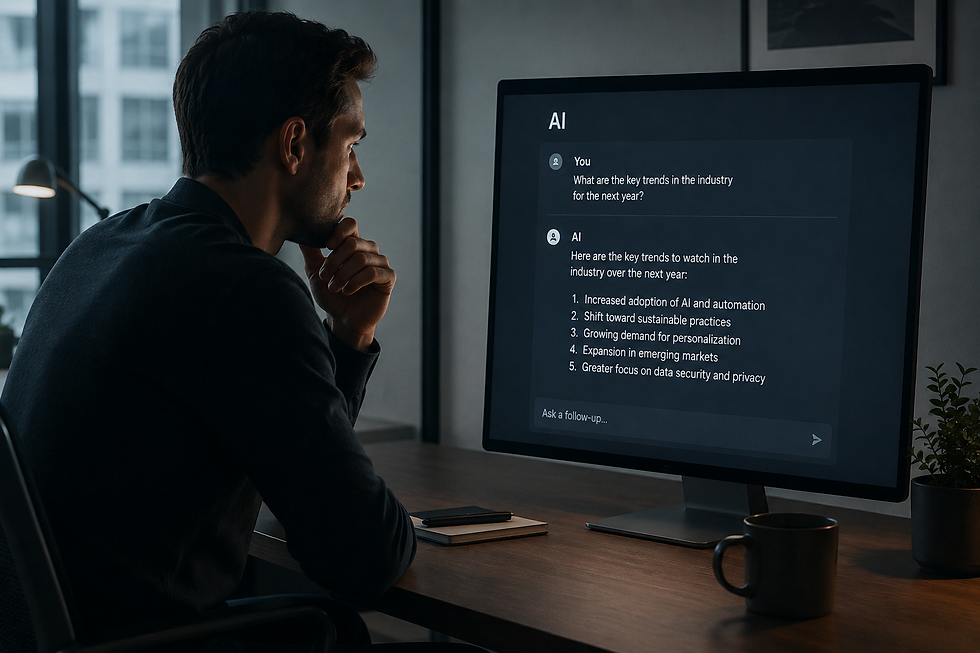
Artificial intelligence is reshaping industries at an extraordinary pace — and recruitment is no exception.
In tech hiring especially, where competition for skilled talent remains fierce and hiring timelines can make or break growth, AI has quickly become more than just a buzzword. It’s a practical tool helping recruiters move faster, work smarter, and make better-informed decisions.
But while AI is changing how recruitment works, it’s not replacing the human side of hiring anytime soon.
Because finding the right candidate isn’t just about matching keywords to job descriptions.
It’s about people.
Here’s how AI is transforming tech recruitment — and where human expertise still matters most.
How AI Is Changing Tech Recruitment
1. Faster Candidate Sourcing
One of AI’s biggest strengths is speed.
AI-powered sourcing tools can scan vast candidate databases, online platforms, and talent pools in a fraction of the time it would take manually.
Instead of recruiters spending hours searching for suitable profiles, AI can quickly identify candidates based on:
Skills and certifications
Experience levels
Industry background
Job history
Location preferences
Relevant technical keywords
This significantly accelerates the early stages of recruitment — especially when hiring for specialist or hard-to-fill tech roles.
2. Smarter CV Screening
Anyone who’s recruited for technical roles knows how overwhelming application volumes can be.
AI screening tools can help shortlist applicants based on defined criteria, reducing manual admin and helping teams prioritise the most relevant profiles faster.
This can improve:
Time-to-hire
Recruitment efficiency
Consistency in initial screening
Recruiter productivity
That said, “efficient” doesn’t automatically mean “accurate” — something we’ll come back to.
3. Improved Candidate Matching
Modern AI tools go beyond simple keyword matching.
Some platforms analyse patterns across skills, role fit, career progression, and candidate behaviour to make smarter recommendations.
This can be particularly valuable in tech recruitment, where transferable skills often matter just as much as exact job titles.
For example, a strong backend engineer from an adjacent industry may be an excellent fit — even if their CV doesn’t mirror the job spec perfectly.
AI helps surface possibilities faster.
4. Better Recruitment Data and Insights
AI also strengthens recruitment decision-making through analytics.
Hiring teams can use AI-driven insights to identify patterns like:
Bottlenecks in hiring workflows
Time-to-fill trends
Candidate drop-off points
Source effectiveness
Skills demand shifts
Salary benchmarking patterns
This allows recruitment teams and business leaders to make more strategic talent decisions rather than relying purely on instinct.
5. Enhanced Candidate Engagement (At Scale)
AI-powered chatbots, automated communication workflows, and scheduling tools can improve candidate responsiveness.
Simple but time-consuming processes like:
Interview scheduling
Application acknowledgements
FAQ responses
Status updates
can be automated, creating a smoother experience for candidates while freeing recruiters to focus on higher-value interactions.
Because nobody enjoys applying for a role and hearing absolutely nothing for three weeks.
What AI Still Can’t Replace
For all its strengths, AI has limits.
And in recruitment, those limits matter.
Human Judgment
A CV rarely tells the full story.
AI can identify patterns, but it cannot truly understand context the way experienced recruiters can.
Career changes.
Unusual growth trajectories.
Hidden potential.
Motivation.
Adaptability.
Commercial awareness.
Human recruiters can interpret nuance that algorithms may overlook.
The strongest candidates are not always the most obvious on paper.
Relationship Building
Great recruitment is relationship-driven.
Candidates — especially experienced tech professionals — are rarely making decisions based solely on salary or job specs.
They care about:
Team dynamics
Leadership style
Career growth
Company culture
Business stability
Flexibility
Long-term opportunity
These conversations require trust, empathy, and genuine human interaction.
AI can automate communication.
It cannot build meaningful relationships.
Assessing Cultural and Team Fit
Technical capability matters.
But so does how someone collaborates, communicates, solves problems, and aligns with a business environment.
AI may support assessment frameworks, but determining whether someone will thrive within a team still requires human evaluation.
Culture fit should never mean hiring clones — but team compatibility absolutely matters.
Candidate Experience
Efficiency is important.
But over-automation can make hiring feel impersonal fast.
Nobody wants to feel like they’re applying to a robot.
Candidates still value:
Personal communication
Honest conversations
Real feedback
Thoughtful engagement
Human reassurance during decision-making
In competitive tech markets, candidate experience can directly affect hiring success.
Strategic Talent Advisory
Recruitment is no longer just transactional hiring.
Businesses increasingly need strategic guidance around:
Workforce planning
Skills gaps
Employer branding
Talent pipeline development
Retention challenges
Hiring market dynamics
AI can provide data.
But strategy requires experience, business understanding, and human judgment.
The Best Recruitment Strategies Combine Both
The smartest recruitment teams are not choosing between AI or human expertise.
They’re combining both.
AI handles speed, automation, and data-heavy tasks.
Humans handle strategy, relationships, judgment, and decision-making.
That balance creates recruitment processes that are both efficient and effective.
Especially in tech, where speed matters — but hiring the wrong person can be incredibly expensive.
What This Means for Employers
Businesses adopting AI in recruitment should ask:
Are we improving efficiency without damaging candidate experience?
Are we using automation to support recruiters, not replace critical thinking?
Are hiring decisions still grounded in human judgment?
Are we balancing speed with quality?
AI is a powerful tool.
But tools are only as effective as the people using them.
Final Thoughts
AI is transforming tech recruitment in meaningful ways — faster sourcing, smarter screening, stronger data, and streamlined workflows.
But hiring remains deeply human.
The best outcomes happen when technology enhances recruitment rather than replacing the expertise, intuition, and relationship-building that great hiring depends on.
Because while algorithms can help find candidates…
People still hire people.
Need Smarter Tech Recruitment Support?
At Incite Insight, we combine modern recruitment strategies, industry expertise, and people-first thinking to help businesses attract exceptional tech talent.
Because the future of hiring isn’t AI alone — it’s intelligent technology backed by human expertise.


Comments